Revelation 7:9
"After this I looked, and behold, a great multitude that no one could number, from every nation, from all tribes and peoples and languages, standing before the throne and before the Lamb, clothed in white robes, with palm branches in their hands"
Uganda is a diverse country with a population of 51 million people. There are 35 major indigenous ethnic groups speaking 33 different languages, as well as 33 smaller groups whose languages each have fewer than 100,000 speakers.
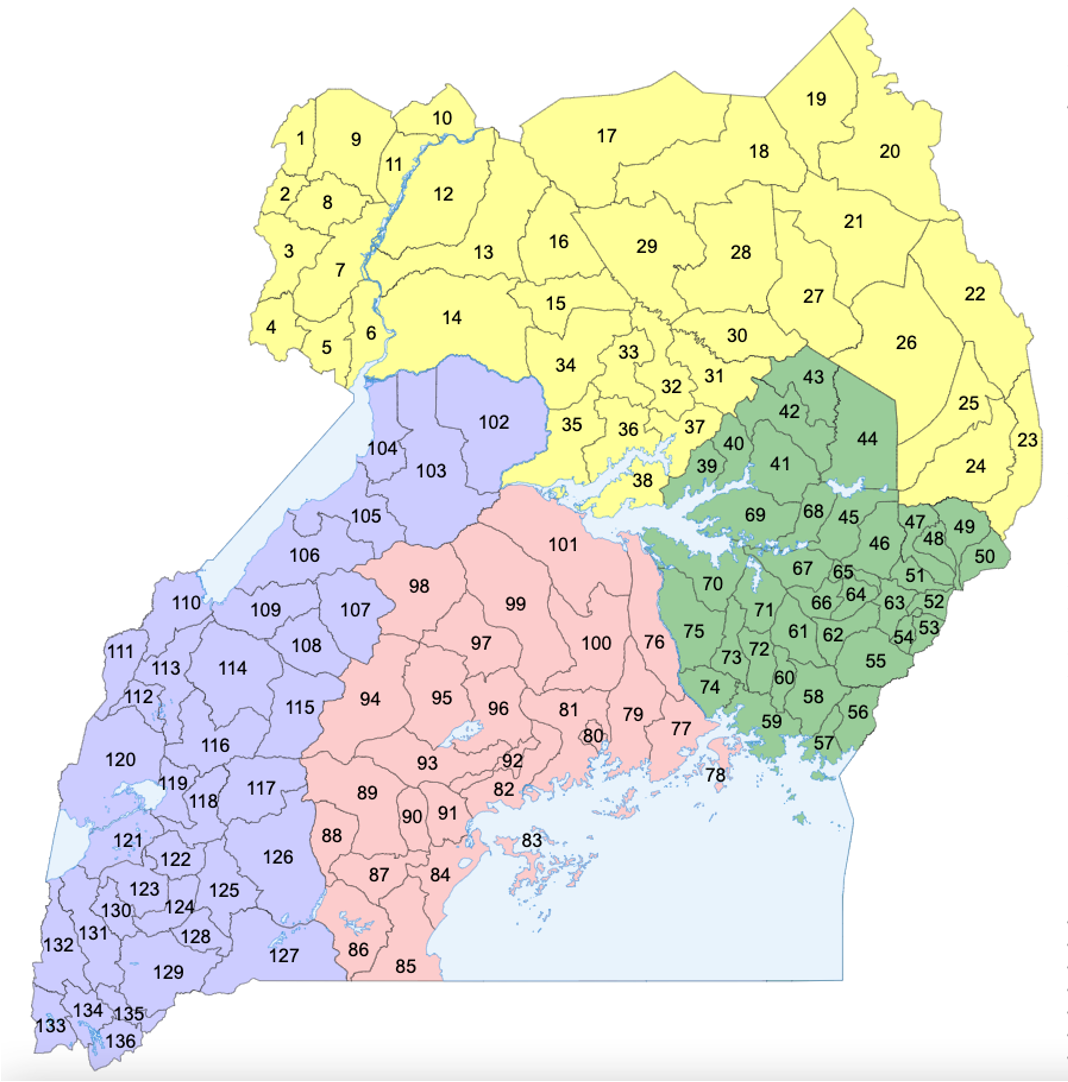
My work as a missionary began in 2020 when I moved from my hometown, Kitgum (18), to Karuma in Kiryandongo (102)—a place I knew little about beforehand. In Kiryandongo District, five major languages are spoken: Alur, Lunyoro, Lugbara, Acholi, and Langi. The reason for this diversity in an area that is not one of Uganda’s major cities lies in the district’s history.
Beginning in 1954, the British colonial government used the district to resettle some refugees from anti-colonial uprisings in Kenya. In the mid-1970s, the notorious dictator Idi Amin seized large portions of land for cattle ranching (his children still live there today).
By 1990, the Ugandan government had officially designated Kiryandongo as a refugee settlement. Several thousand refugees from South Sudan, Sudan, the Democratic Republic of the Congo, and Somalia began settling there. A large number of internally displaced people from northern Uganda also moved to the region during the early 2000s.
Today, the South Sudanese camp in Kiryandongo has a population of about 30,000 people, while the entire district has around 360,000 residents. The Karuma villages are home to approximately 7,000 people.
The predominant religious influences in this region are animism and cultural Catholicism.
Address
Mail: BOX 540051,
Bweyale, Uganda.
Physical: Obote Road, Karuma
Contacts
shadrachlmu@gmail.com
+256-770-947-880
facebook
lubangakene.org